
Skin cancer checks in New Farm involve a detailed GP-led assessment of your skin, identifying any new or changing spots. Early detection plays a key role in reducing risk, with examinations designed to monitor changes over time and guide appropriate treatment if needed. Regular checks support long-term skin health, especially in Australia’s high UV environment.
A spot that “doesn’t look like much” is often what prompts patients to book skin cancer checks. It might be a small change in colour, a new mark, or something that simply feels different compared to the rest of your skin.
In a high UV environment like Brisbane and across Australia, these early observations are important. Skin cancer often develops gradually, and many of the earliest signs are subtle rather than obvious. Skin cancer checks in New Farm are designed to identify these changes early, helping guide appropriate care and follow-up.
At Merthyr Medical Centre, skin assessments are part of ongoing, GP-led care. The focus is not only on identifying concerns, but also on understanding what is normal for your skin and when something may need review.
What Happens During Skin Cancer Checks
A proper skin cancer check involves more than a quick look at a single spot. Your GP will take a structured approach to assess your overall skin health.
Your appointment will typically include:
- A review of your personal and family history of skin cancer
- Discussion of sun exposure, including outdoor work or past sunburns
- Assessment of your skin type and individual risk profile
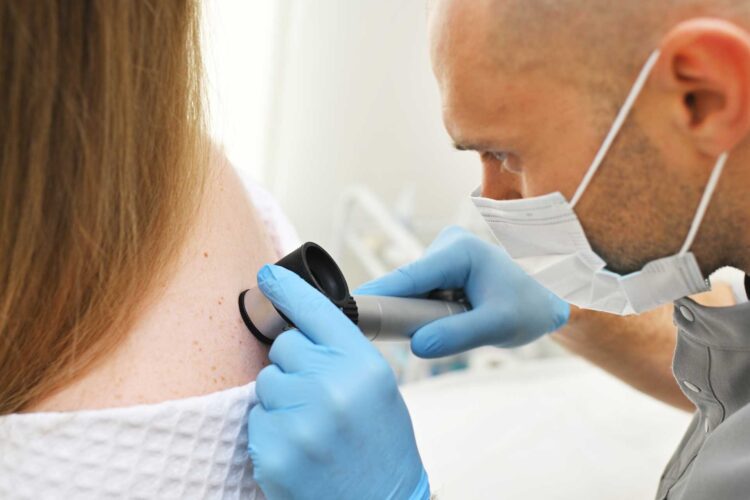
- A full skin examination from head to toe
Patients often ask about the practical side of the appointment. In most cases, you will be asked to change into underwear so that all areas of the skin can be examined. This ensures that less visible areas are not overlooked.
If a spot requires further attention, your GP may:
- Use dermatoscopy for a more detailed view
- Recommend monitoring over time
- Discuss biopsy or removal where clinically appropriate
Not every lesion needs immediate removal. Many areas are safely observed, with follow-up checks used to track any changes.
When to Consider Skin Cancer Checks in New Farm
Some patients attend regularly for preventive care, while others book an appointment after noticing a change.
You may benefit from a skin cancer check if you:
- Notice a mole or spot changing in shape, colour, or size
- Develop a new mark that looks different from surrounding skin
- Spend significant time outdoors or have a history of sun exposure
- Have experienced frequent or severe sunburns
- Have a personal or family history of skin cancer
It is also common to seek reassurance. Many patients are unsure whether a change is significant or not. A clinical assessment helps clarify whether anything needs monitoring or treatment.
Why Small Changes Matter
A common misunderstanding is that skin cancer always presents as a large or obvious lesion. In practice, early changes can be subtle.
Your GP is trained to identify patterns that may not be immediately noticeable, including:
- Slight differences in colour or pigmentation
- Irregular or evolving borders
- Changes compared to your usual skin pattern
- Lesions that develop gradually over time
Because these changes can be difficult to detect on your own, regular skin cancer checks provide a structured way to monitor your skin and reduce uncertainty.
Assessment, Diagnosis, and Treatment Pathways
If a concerning area is identified, your GP will explain the next steps clearly and guide you through the process.
Depending on the findings, this may include:
- Monitoring with scheduled follow-up appointments
- Performing a biopsy to confirm a diagnosis
- Removing the lesion if clinically appropriate
- Referring to a specialist when required
At Merthyr Medical, doctors are trained in performing complex skin cancer procedures, including excisions that may involve reconstructive techniques such as flap repairs and skin grafts when necessary.
Care is coordinated so that each stage is explained, from diagnosis through to recovery and follow-up.
Skin Checks as Part of Preventive Health
Skin cancer checks are often integrated into broader preventive care. Regular monitoring allows your GP to build a clearer picture of your skin over time.
For patients already attending appointments for ongoing health management, such as chronic disease management and long-term health planning, skin checks can be included as part of a structured approach to maintaining overall wellbeing.
Your GP may recommend:
- Routine skin checks based on your risk profile
- Self-monitoring between visits
- Practical advice on sun protection and lifestyle factors
Skin Cancer Checks Across New Farm and Inner Brisbane
Patients often choose a clinic that is easy to access for both initial assessments and ongoing monitoring. Regular follow-up is an important part of effective skin cancer care.
Many patients travel from nearby suburbs such as Newstead and Spring Hill for consistent, GP-led skin checks, especially when they prefer continuity in their care.
Others visit from Teneriffe, Fortitude Valley, and Bowen Hills due to the convenience of the Merthyr Village location. This accessibility makes it easier to attend regular appointments and follow-up reviews when needed.
Frequently Asked Questions About Skin Cancer Checks
Yes. Skin cancer often develops without symptoms. Regular checks help identify changes early, even when you feel otherwise healthy.
Most appointments take between 15 and 30 minutes, depending on your individual risk factors and whether any areas require closer assessment.
No. Many lesions can be safely monitored. Your GP will recommend removal only when clinically necessary.
The frequency depends on your personal risk factors. Your GP will advise whether annual or more frequent checks are appropriate.
Your GP will explain the findings and discuss next steps, which may include monitoring, biopsy, or removal.
Yes. You are encouraged to point out any spots or changes you have noticed so they can be assessed as part of your examination.
Book a Skin Cancer Check in New Farm
Deciding to have a skin cancer check often starts with a small observation. It may be a spot that has changed slightly, something new that has appeared, or simply a sense that it is time to have your skin reviewed properly.
If you are unsure whether a change is significant, a structured assessment can provide clarity. Many patients attend not because something is clearly wrong, but because they want to understand what is normal for their skin and whether anything requires monitoring.
At Merthyr Medical Centre, skin cancer checks are performed as part of ongoing, GP-led care. This allows your doctor to track changes over time, provide consistent advice, and guide next steps if needed.
If you have noticed a change or have not had your skin assessed recently, you can arrange an appointment through the online booking system at a time that suits you.